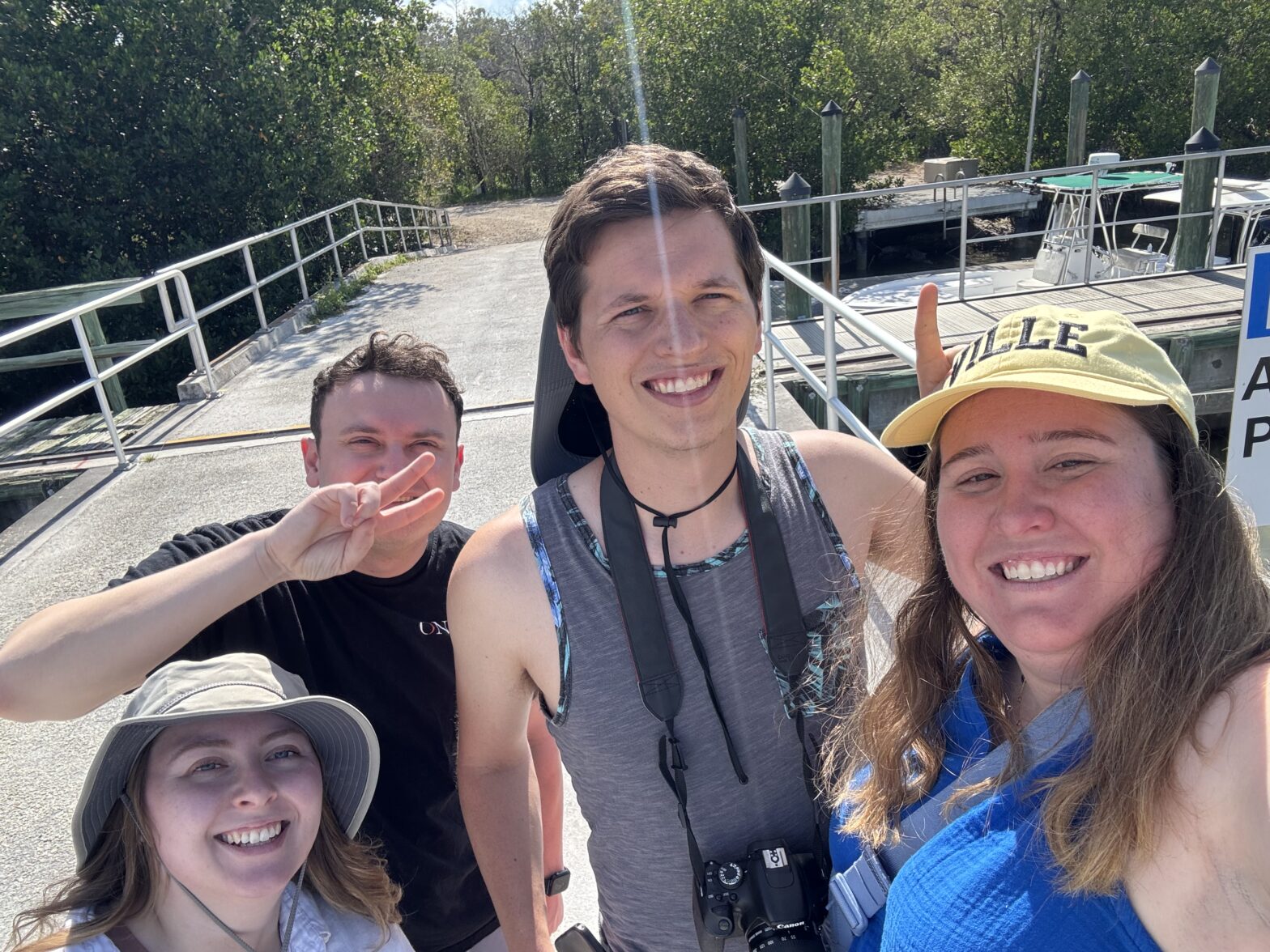
Some people find it easy to wake up early. Some people find it difficult, especially when you’re on vacation. I’ve always been on the “waking up early is easy” side of things. That goes double if the mattress at the AirBNB in Florida City has collapsed on my side of the bed so that Elizabeth was laying several inches above me on her side. I’m not used to being the second one awake on vacation, but when I woke up on the morning of April 26, Moriah was already sitting up in her bed. That was a new one.
Some of us take the sleep we can get, but want to be woken up when the action begins. James is a shiftworker and he really just wanted to do what everyone else was doing in Florida, so it wasn’t surprising to me that he woke up in time for my planned morning expedition. Things were a little more iffy for Elizabeth. My beloved wife can and will sleep through the apocalypse one day. But she did eventually stagger out of bed, because one of the only things she loves more than sleep in a national park.
And then some of us don’t want to leave bed and know we won’t want to leave bed. I don’t match that energy, but I do respect it. That’s why when the four of us woke up, we tip-toed our way downstairs to avoid waking Kins and Keer one room over. Grabbing some Pop-Tarts and stepping out into the late-April sauna, we began our full-day adventure in south Florida’s two national parks.
The first adventure was yet another in a long edition of Nolan’s Hunts For Cool Animals in the 2020s. The American crocodile, contrary to popular culture, is a rare and illusory figure on mainland Florida. This is in part due to the extreme nature of its cold-bloodedness, which basically requires water temperatures to remain up into the 80s at all times. Between that and habitat loss, the American crocodile’s US reach is thus limited to the saltwater portions of the Everglades and Biscayne as well as the Keys. As someone who has seen plenty of gators in his day but never a crocodile in the wild, I had asked a ranger at Shark Valley the day before where the best croc hunting was. He’d told me that they actually had a couple of crocodiles hanging out near Shark Valley recently, a highly anomalous behavior, but the most reliable sightings in the park were closer to the coast at the Flamingo Marina.
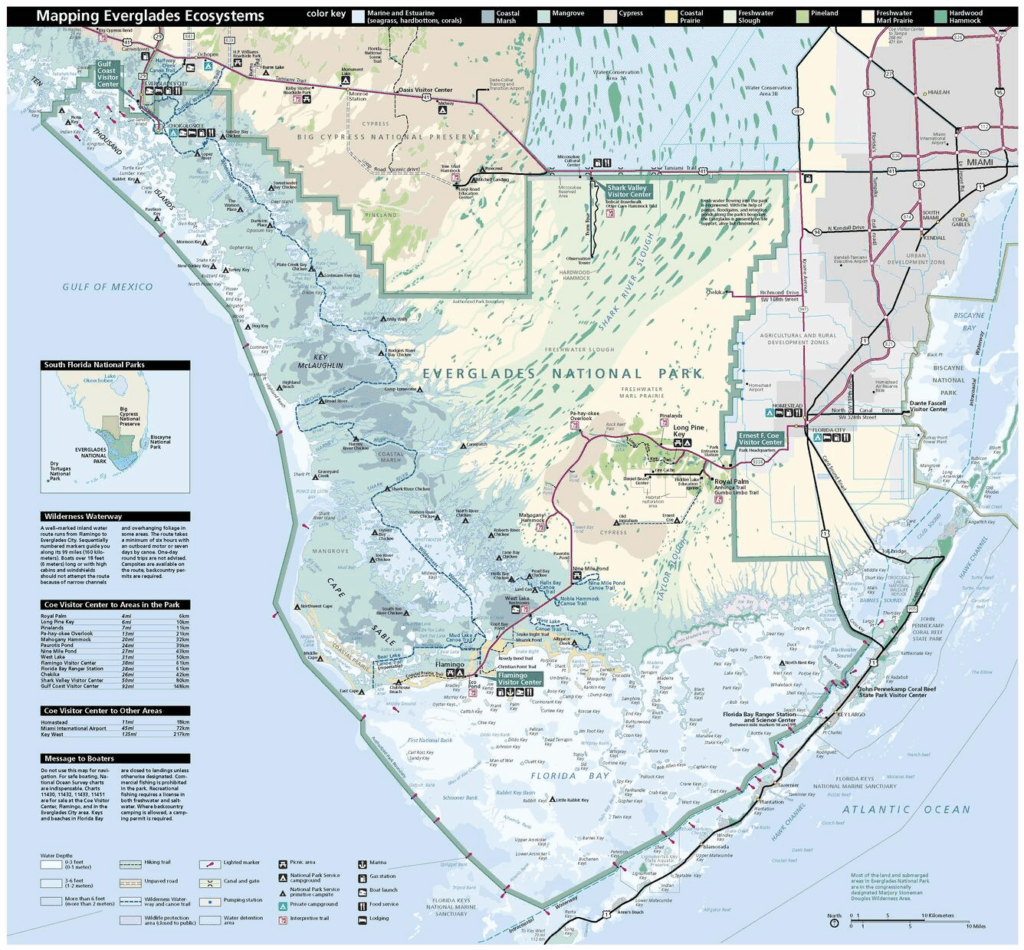
As you can see on the map, Flamingo is at the far end of the main road through the national park. It was close to an hour drive from Florida City, so there was a minor level of commitment required to head that way. No trouble; commitment isn’t an issue for me once I’m fixated on something, and I was fixated on trying to find a crocodile now. As Elizabeth put it, we were arriving at “the best time of day, since the crocodiles would be active in the morning”.
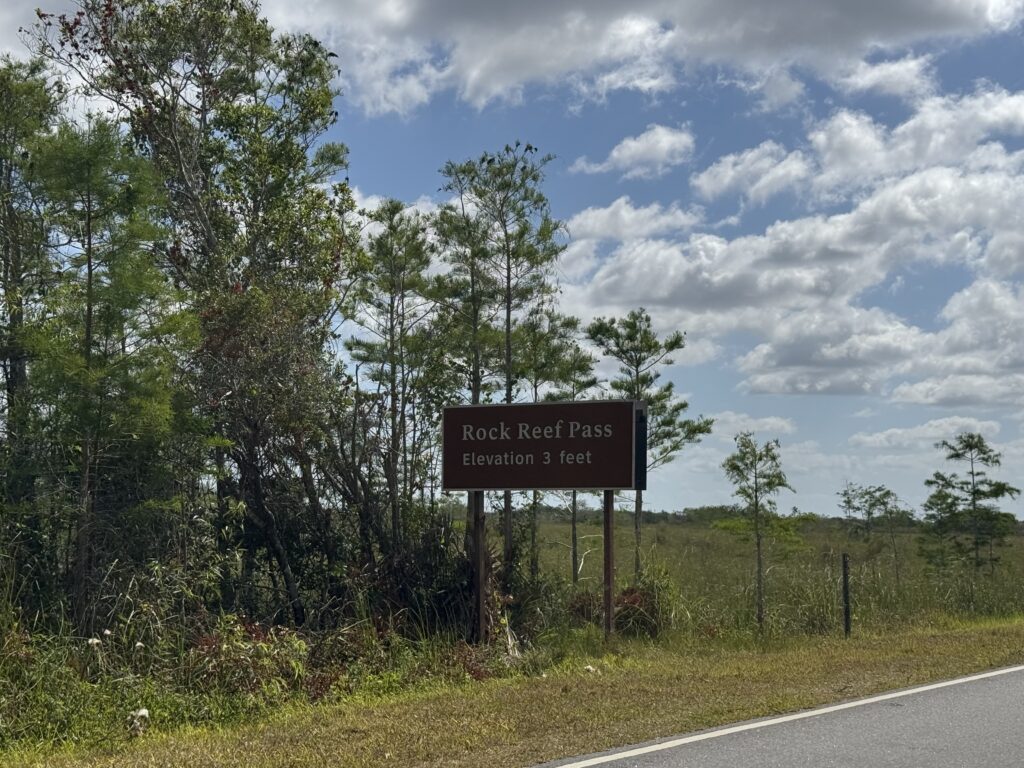
Elizabeth drove the road on the way out to Flamingo, which meant I got to look out the passenger seat. Everglades in the dry season is a fascinating mix of pine forests and big sawgrass prairies that almost make you feel like you’re looking at the Serengeti. There was the relatively dry high point on the road with a sign entitled “Rock Reef Pass – Elevation 3 Feet”. Normally, geography stuff like that tickles my fancy, but this sign was really speaking to Elizabeth for some reason.
About 2/3 of the way down the road, the prairie terrain was replaced by a scrubby forest. I can’t imagine those little things were cypress, but I’m not a cypress expert, so maybe? There were a few of those canals that looked similar to the ones we had airboated on the day before. And finally, Elizabeth pulled into the Flamingo village complex. And “complex” is a good word to use for it. There were little parking lots and access drives all over the place, leading to a visitor’s center, a big campground, a lodge, and a marina. Who knew that the Everglades had this much in the way of visitor’s services way in the back of the park? Based on what the park ranger (and the Internet) had told me, we needed to head to the marina. That’s where the crocodiles liked to hang out.
It was quiet and oh so sticky here at the southern tip of the mainland U.S. Cypress and mangrove trees lined the water of the little marina, while boats bobbed in the smooth water. Elizabeth and I employed a favorite trick of ours – look for the park ranger. If anyone knows what the tourists want to see, it’s a park ranger who’s deployed to the tourist-heavy spots. Sure enough, someone was standing by the boat ramp dressed in way-too-warm-for-the-weather trademark NPS khaki. We asked her how she was doing and what she was up to. The ranger replied that she was here to keep an eye out for crocodiles, but none appeared to be out yet because “it was too early”. Elizabeth’s confident animal knowledge was shattered. Apparently, as cold-blooded as crocodiles are, they’ll hang out in whatever is warmer, the water or the land. This early in the morning, the water was warmer than the air temperature, so the crocs were hanging out mostly submerged. (I recoiled at the thought of something being warmer than the infernal sauna we were in).
So maybe there were no crocodiles to be seen, but this early in the morning there was at least one other friend to hang out with. Manatees! Everybody loves Florida’s beloved sea cow. Based on the people standing near the marina and pointing, one was under a dock right there. And in fact, if I squinted, there was a shadow just under the water.
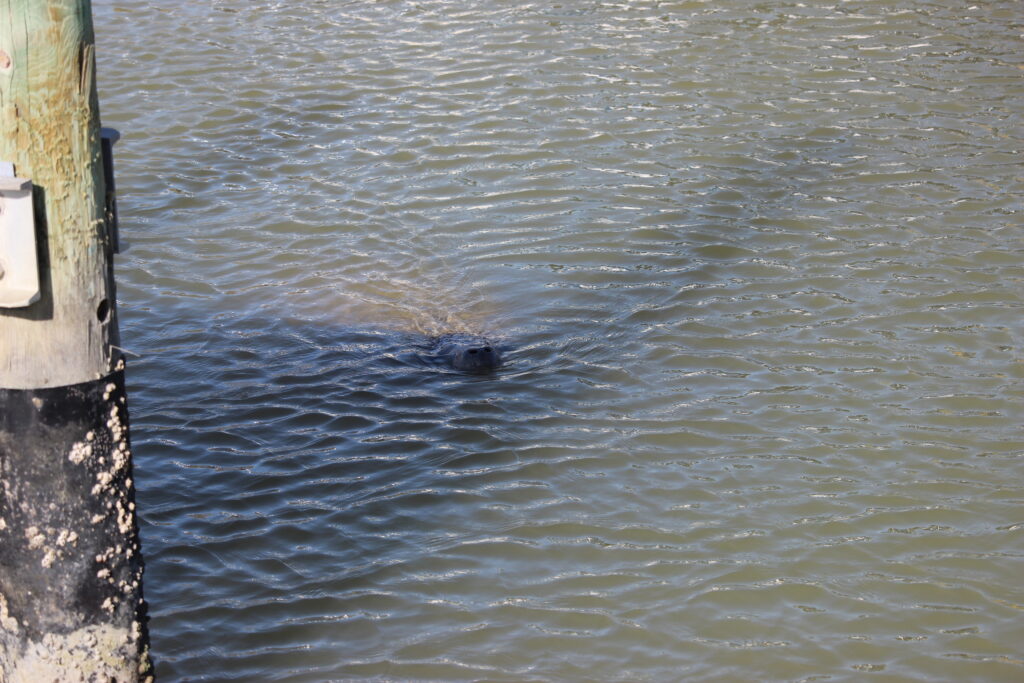
The shadow went away before James, Elizabeth, or Moriah could see it. But I knew what I’d seen. At some point, the manatee was going to come up for another breath of fresh air, and I was going to be there to get a picture of it. I ran out onto the dock I’d seen it near and patrolled the waters, looking for the dark shadow to return.
About a minute later, it did reappear. This time, the manatee spent some time lazing near the surface of the water, giving me a chance to get a good look at it.
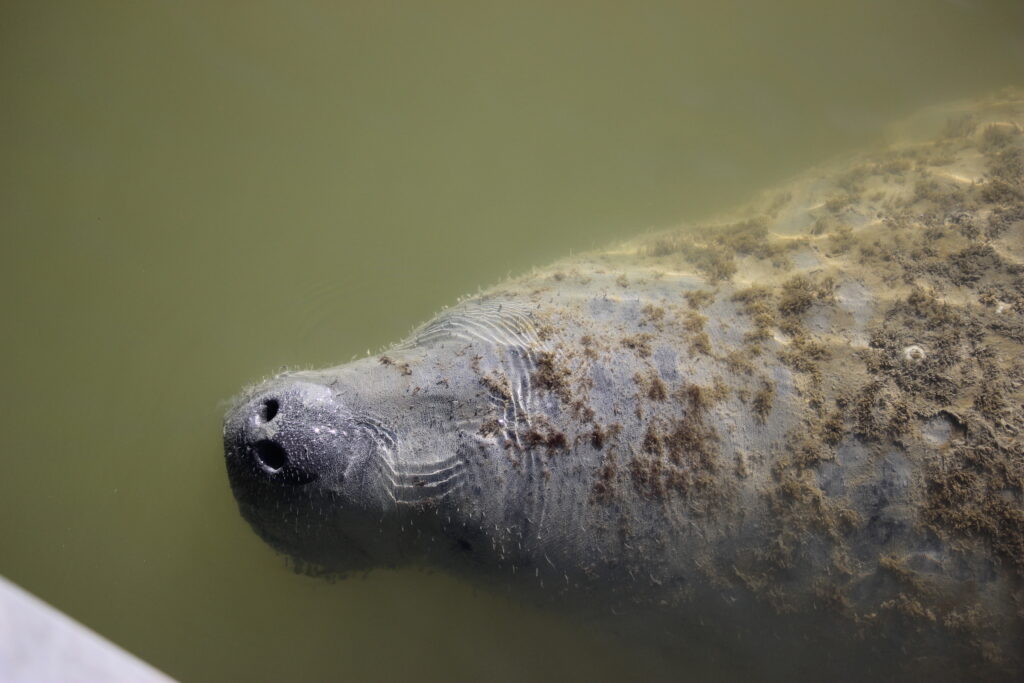
Hard to say those things are cute, but they are called sea cows for a reason. Regardless, the manatee’s lounging behavior gave everyone else a chance to take a look at it too before it slipped back into the murky depths of the marina.
There were a couple of other groups of people at the marina who clearly didn’t belong to the class of boat operators and tourists getting ready to go for a ride. Most of these people had long camera lenses and were stalking the parking lot, taking pictures of everything that moved – mostly stuff that flew. I talked to one of the birders. He was extremely excited to show off the myna bird in the parking lot in front of us. Biting back some sort of snarky remark about the beautiful natural backdrop, I agreed with him that the myna looked quite beautiful.
None of the nature-watchers had found a crocodile earlier, but coming off of the dock after the manatee experience I noticed a cluster of people standing along the bridge near the mouth of the marina looking across the water. Stay calm, folks, we might have a live one. I made eye contact with Elizabeth and silently signaled that I was about to run away from the group. She silently acknowledged it, then turned to explain what was going on to James and Moriah as I jogged away. The two of us have been together a long time and know how the other operates.
The crowd was breaking up by the time I ran onto the bridge, but one of them was kind enough to stop and point out what they were looking at. On the other side of the water maybe 50 yards away, a big scaly shape was laying half-in, half-out of the brackish water. Was it?
It was.
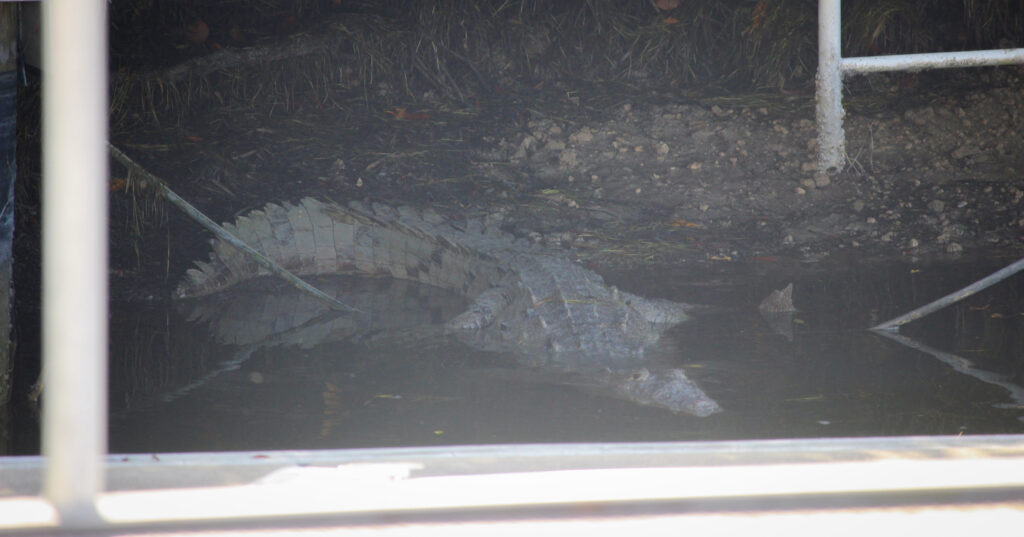
Crocodile!
I snapped some pictures with the Canon and prayed that Lightroom could fix some of the nastiest exposure work I’d ever seen (note: kind of? At least you can tell what it is in the picture above). Then Elizabeth and the others caught up to me. Elizabeth saw me turning and walking towards them and clearly anticipated disappointment. “Was it anything?” I fought to keep my voice casual and said “There’s a crocodile right across the water”.
Within moments the three of them were exclaiming, pulling out phones, and taking pictures of their own of the crocodile (who obliged by withdrawing out of the water slightly to show more of its back and scales, which you can see in the picture above). I got the usual rush of satisfaction from finding one of North America’s wildest and coolest big animals. This one felt a little extra special, because I was sharing that rush with friends.
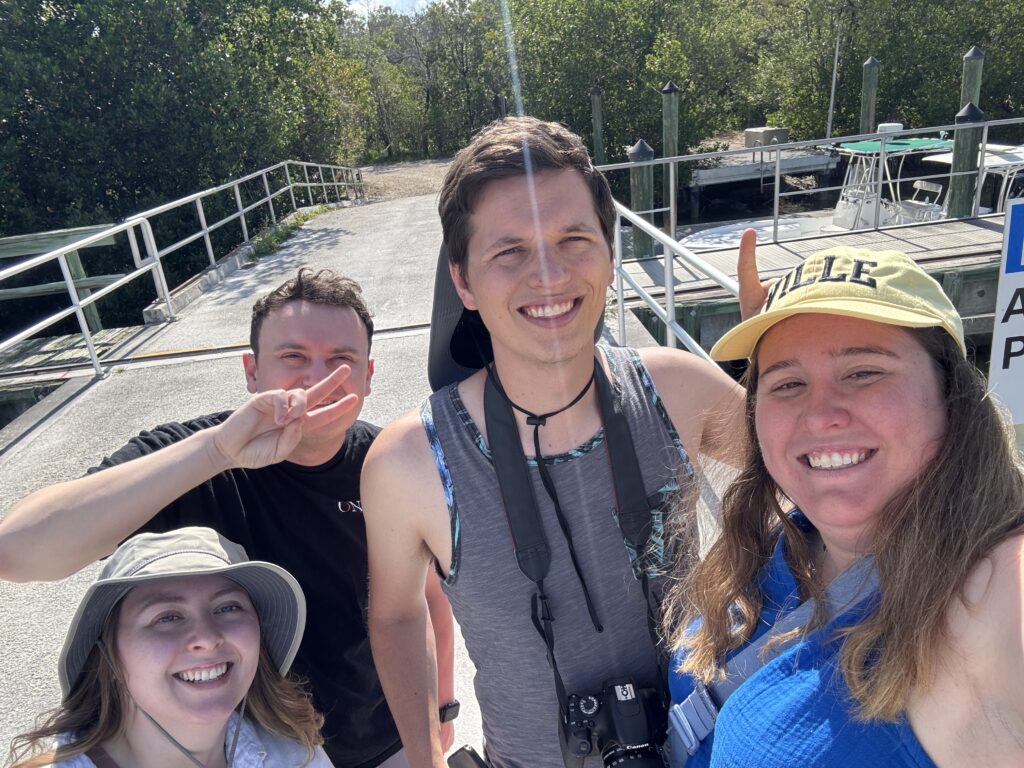
While we were all down here, there was a little bit of time to kill. The Guy Bradley Visitor Center was just a short walk away. I guess the pink color of the building really added to the “flamingo” element of the Flamingo village.
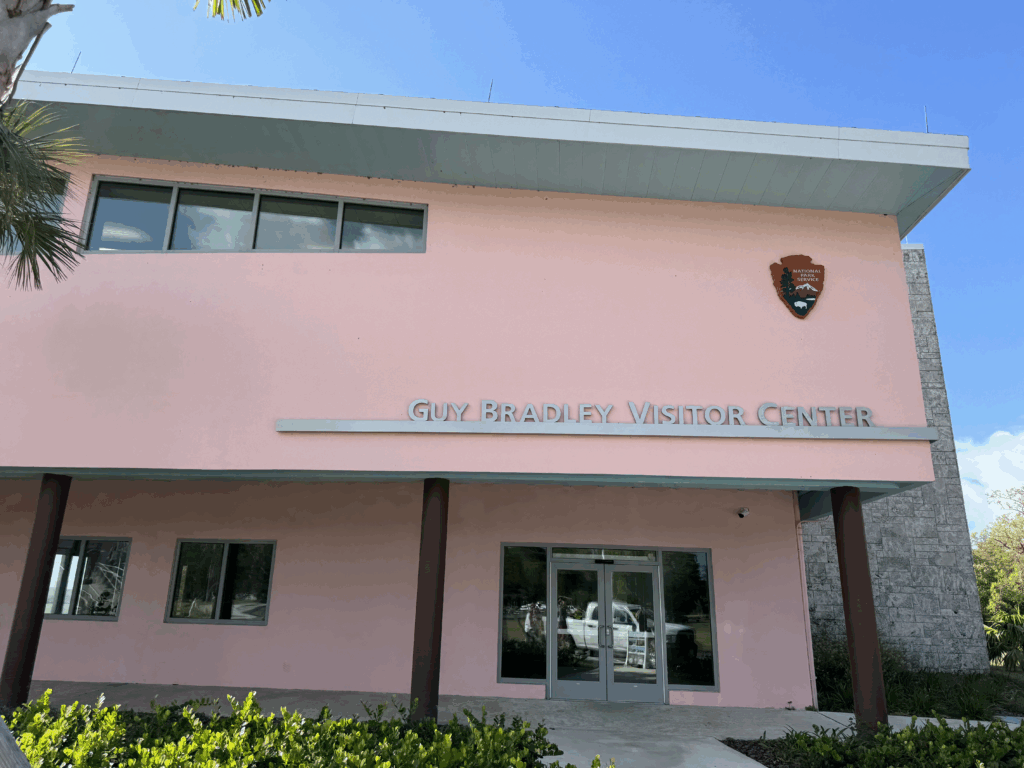
Inside there were quite a few exhibits – much better than the Shark Valley Visitor Center. The exhibits largely focused on aquatic and land-based life in the Everglades, so I got to learn a lot about manatees and crocodiles. The visitor center was also on the second floor of a building on stilts and commanded a pretty nice view of the Gulf.
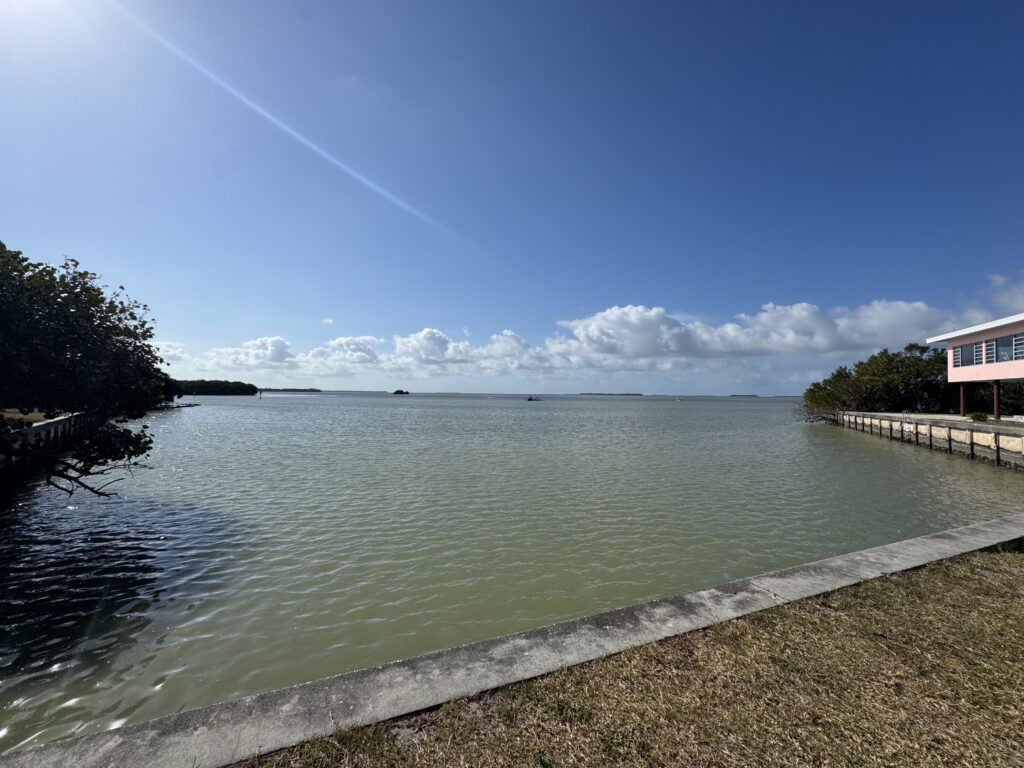
There’s a whole other national park in south Florida. Elizabeth and I had booked a snorkeling tour at Biscayne National Park for later that afternoon. Nobody else had been keen on snorkeling, but after a little prodding everyone else had booked a kayak tour among the mangroves. The kayak tour began in the early afternoon; that meant it was time to leave the Everglades behind. I drove back the other way to Florida City so that Elizabeth could enjoy the scenery; I think she secretly just wanted to take a picture of the Rock Reef Pass sign.
Everglades National Park is an interesting place. We were there in the wrong time of year for the River of Grass, but the airboat tour still showed us what it could be like at another time of the year. The wildlife is pretty gnarly down there, which is always a plus. I wouldn’t put it too high on a list of places I’m dying to return to. If we do go back, though, renting a boat to be able to traverse some of the waterways and sloughs and get into the backcountry would be the way I’d want to see it. For now, though, Elizabeth and I needed to do something to reenergize. Good news for us: Robert Is Here.
